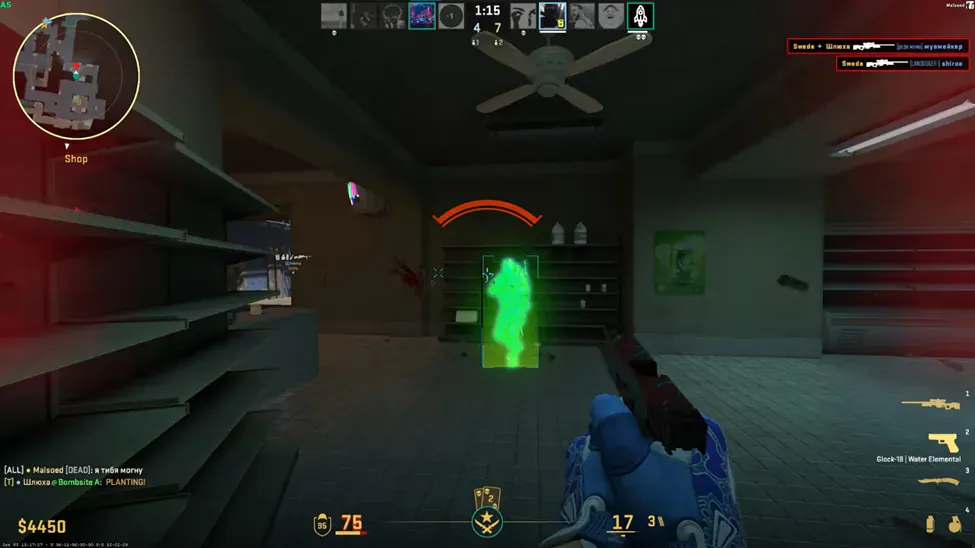
Buyers google three words together: ESP, aimbot, and wallhack. Sellers reuse the same words with different menus behind them. This article defines what each module usually means in a FACEIT CS2 build and points to the published This site controls on the product page.
Aimbot: assisted aim, not magic
An aimbot reads game state and moves your crosshair toward a chosen bone—head, chest, or another hitbox—within limits you set. Real menus expose tuning sliders instead of a single “on” switch.
Common controls on This site include smooth aim, FOV circle size, bone selection, and visible check so targets behind solid cover are ignored. Read the dedicated Aimbot controls page for the full published list.
Aimbot does not replace recoil control or crosshair placement discipline. It reduces the gap when you already understand timing and peek angles.
ESP: information on top of the scene
ESP (extra sensory perception) draws information about players—boxes, skeletons, health, distance—on your screen. It is the umbrella term; wallhack is the colloquial name when those labels stay visible through walls.
Player ESP on This site covers boxes, skeleton lines, health display, and related toggles documented on Player ESP. Used calmly, ESP helps with spacing and trade timing; used loudly, it clutters the screen and makes manual review easier.
Wallhack vs radar
Wallhack usually means world geometry does not hide ESP labels. Radar is a separate 2D map overlay—often lower clutter—for footstep timing and rotate calls.
- ESP answers “where is the body relative to my crosshair?”
- Radar answers “where is the blob relative to the minimap?”
Compare modules on the features hub before you enable everything at once. Many players run ESP without maxing every cosmetic flag.
Verwandte Seiten:Aimbot controlsPlayer ESPProduct page
Zurück zum Blog